When it comes to alloy steels, two of the most commonly discussed grades are 4140 steel and 4340 steel. Both belong to the chromium-molybdenum family, but they each have unique characteristics that make them suitable for different industrial applications. If you’ve ever wondered which one is better for your project, this article will walk you through everything you need to know.
We’ll cover their chemical composition, mechanical properties, toughness, machinability, heat treatment, applications, and most importantly, the key differences that will help you decide.
What is 4140 Steel?
4140 is a versatile chromium-molybdenum alloy steel with about 0.40% carbon. It is known for its balance of strength, hardness, and toughness.
-
It is often supplied in the quenched and tempered condition.
-
4140 is commonly used in gears, shafts, axles, and machinery components.
-
Cost-wise, it is more affordable compared to 4340.
In short, think of 4140 as the “workhorse” alloy steel: reliable, cost-effective, and suitable for a wide variety of applications.
What is 4340 Steel?
4340, on the other hand, is a nickel-chromium-molybdenum alloy steel. The nickel content gives it an extra edge in toughness and fatigue resistance.
-
With about 1.65–2.00% nickel, 4340 offers excellent hardenability and impact resistance.
-
It is widely used in aircraft landing gear, crankshafts, connecting rods, and oil & gas drilling tools.
-
Compared to 4140, 4340 is stronger but also more expensive.
If 4140 is the workhorse, then 4340 is the “athlete” of alloy steels—built for extreme performance.
Chemical Composition Comparison
Here’s a quick look at the chemical composition of both steels:
| Element | 4140 Steel (%) | 4340 Steel (%) |
|---|---|---|
| Carbon (C) | 0.38 – 0.43 | 0.38 – 0.43 |
| Manganese (Mn) | 0.75 – 1.00 | 0.60 – 0.80 |
| Chromium (Cr) | 0.80 – 1.10 | 0.70 – 0.90 |
| Molybdenum (Mo) | 0.15 – 0.25 | 0.20 – 0.30 |
| Nickel (Ni) | — | 1.65 – 2.00 |
| Silicon (Si) | 0.15 – 0.35 | 0.15 – 0.30 |
👉 Key difference: The addition of nickel in 4340 is the game-changer, improving its toughness, impact resistance, and hardenability.
Mechanical Properties
Both steels can be heat-treated to achieve a wide range of strengths and hardness.
| Property | 4140 Steel (Typical) | 4340 Steel (Typical) |
|---|---|---|
| Tensile Strength | 655 – 1080 MPa | 745 – 1860 MPa |
| Yield Strength | 415 – 930 MPa | 470 – 1600 MPa |
| Hardness (HB) | 197 – 302 | 217 – 331 |
| Elongation (%) | 12 – 25 | 10 – 20 |
| Impact Toughness | Good | Excellent |
👉 4340 is clearly stronger and tougher than 4140, especially after heat treatment.
Applications of 4140 vs 4340 steel
| Industry | 4140 Steel Applications | 4340 Steel Applications |
|---|---|---|
| Automotive | Axles, gears, shafts | Crankshafts, transmission parts |
| Aerospace | Landing gear components (limited) | Landing gear, turbine shafts |
| Oil & Gas | Drill collars, tools | Drill bits, downhole tools |
| Machinery | Bolts, couplings, spindles | High-stress machine parts |
| Defense | — | Armor, weapon components |
Cost Comparison: 4140 VS 4340 steel
-
4140 steel is cheaper because it doesn’t contain nickel.
-
4340 steel is more expensive but offers superior performance in critical applications.
If budget is tight and performance demands are moderate → 4140.
If safety and reliability in extreme conditions are critical → 4340.
Which One Should You Choose?
Here’s the bottom line:
-
Choose 4140 if you need a cost-effective alloy steel for general engineering and automotive applications.
-
Choose 4340 if you need maximum strength, toughness, and fatigue resistance for aerospace, defense, or oil & gas.
Conclusion
Both 4140 and 4340 steels are excellent choices, but they serve different purposes. 4140 is more affordable, versatile, and easier to machine, while 4340 provides superior toughness and performance under extreme conditions.
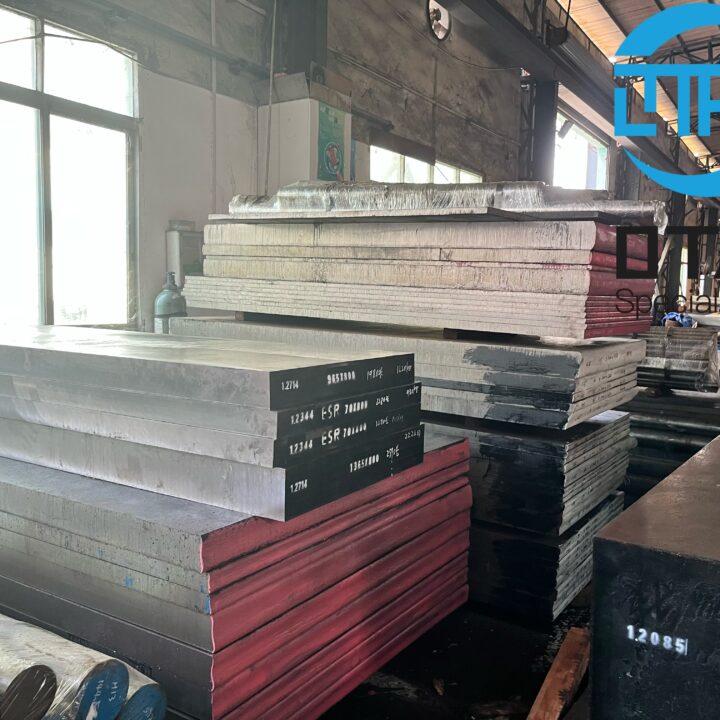
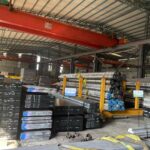
At Dongguan Otai Special Steel, we stock and supply both 4140 and 4340 steels in various sizes and heat-treatment conditions. If you’re unsure which one fits your project best, feel free to reach out to us for expert advice.
📧 Email: [email protected]
📱 WhatsApp: +8613642825398