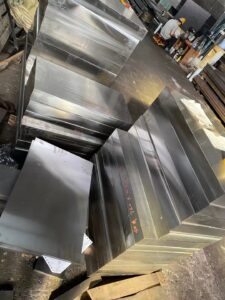
 Choose the right stainless tool steel for your application is critical — not just for performance, but also for cost, durability, and efficiency. Two of the most widely used stainless steels in industrial tooling and mold-making are 440C and 1.2083.
440C and 1.2083 Stainless Tool Steel how to choose.
While they may appear similar because of their stainless nature and hardenability, they serve very different purposes.
What is 440C Stainless Steel?
440C is a high-carbon, high-chromium martensitic stainless steel. It’s known for its very high hardness (up to 60–62 HRC), wear resistance, and moderate corrosion resistance. It is often used in knife blades, surgical tools, bearings, and valve components, where sharpness, strength, and wear resistance are critical.
Once heat-treated, 440C becomes extremely hard and retains that hardness under pressure and moderate heat. However, its corrosion resistance is not as strong as that of austenitic stainless steels, especially in chloride or acidic environments.
What is 1.2083 Stainless Tool Steel?
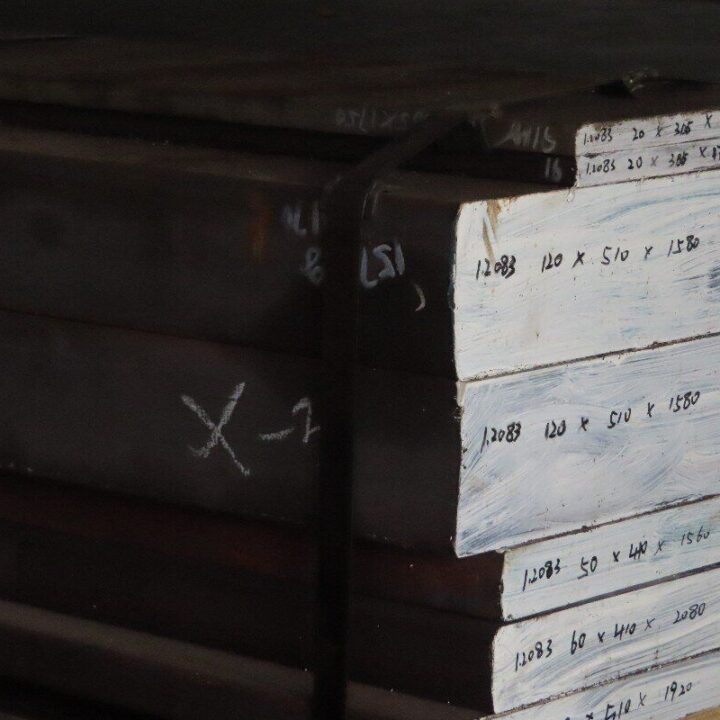
1.2083, also known as X42Cr13, is a corrosion-resistant tool steel primarily used in the plastic mold industry. chlorine-based plastics.
It offers excellent polishability, making it a top choice for mirror-finish molds, such as those used for optical lenses, clear containers, or precision plastic components. It is usually delivered in pre-hardened condition (28–36 HRC) but can be further hardened up to 50–52 HRC if needed.
Key Differences:
-
440C has significantly higher carbon → higher hardness and wear resistance
-
440C has more chromium → better corrosion resistance, especially for cutting edges
-
1.2083 is lower in carbon but optimized for plastic mold performance and polishability
Applications: When to Use 440C or 1.2083
| Application Type | Best Choice | Why |
|---|---|---|
| Knife blades | 440C | High hardness and wear resistance |
| Ball bearings, valve parts | 440C | Precision + corrosion resistance |
| Injection molds (PVC, ABS, etc.) | 1.2083 | Corrosion-resistant to gases, polishable |
| Optical mold parts | 1.2083 | High polishability and surface quality |
| Wear-resistant bushings | 440C | Long life under friction |
| Mirror-finish plastic molds | 1.2083 | Superior polishing properties |
| General tooling in wet environments | 440C | Moderate corrosion + hardness |
| Medical instruments | 440C | Sterilizable, sharp, and hard |
440C and 1.2083 Stainless Tool Steel how to choose ?
Here’s a quick way to decide:
-
Choose 440C if:
-
You need extreme hardness
-
The part is a cutting or wear tool
-
Corrosion resistance is important but not in plastic mold environments
-
You’re making bearings, knives, or valve components
-
-
Choose 1.2083 if:
-
You’re making plastic injection molds
-
Your mold requires mirror polish
-
The plastic used emits corrosive gases (like PVC)
-
You want a pre-hardened steel that’s easy to machine
-
Still Not Sure? We Can Help.
Two of the most widely used stainless steels are 440C and 1.2083.At Dongguan Otai , we stock both of them in various sizes and forms.Whether you need technical advice, a quote, or help with heat treatment specifications, we’re here to support you.
📧 Email us at [email protected]
💬 Message us on WhatsApp: +8613642825398
Let us help you choose the right steel — quickly and professionally.