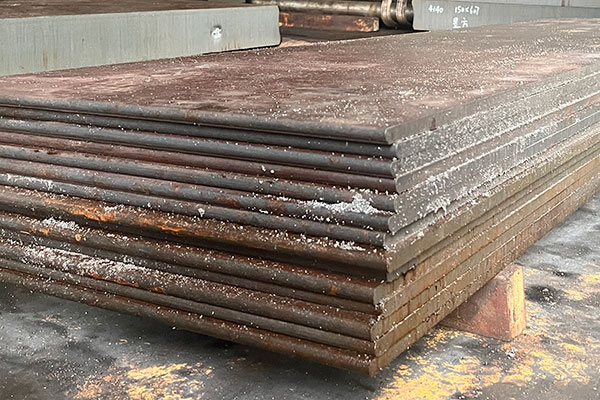
What Is 4140 Steel?
If you work in the machinery, automotive, oil & gas, mining, or heavy equipment industry, you’ve probably heard about 4140 steel. It is one of the most widely used low-alloy steels in the world because it offers an excellent balance of strength, toughness, wear resistance, and machinability.
But what exactly is 4140 steel? Why do engineers, machine shops, and steel distributors prefer it over many other alloy steels? Is it suitable for your project?
In this complete guide, we’ll answer all of these questions and much more.
Whether you’re purchasing round bars, forged blocks, flat bars, or pre-machined materials, understanding the characteristics of 4140 steel can help you reduce manufacturing costs, improve product performance, and extend service life.
What Does “4140” Mean?
Many buyers assume that “4140” is simply a product name. In fact, it is a steel designation defined by the AISI/SAE steel classification system.
The number “4140” provides useful information about the alloy.
- The first two digits (41) indicate that it belongs to the chromium-molybdenum alloy steel family.
- The last two digits (40) represent the approximate carbon content of 0.40%.
This combination of chromium, molybdenum, and carbon gives the steel its excellent hardenability and mechanical performance.
Compared with plain carbon steels such as 1045, 4140 offers significantly better strength after heat treatment while maintaining good toughness.
International Equivalent Grades of 4140 Steel
One interesting fact is that engineers around the world often use different names for essentially the same material.
| Country | Standard | Equivalent Grade |
|---|---|---|
| USA | ASTM / AISI | 4140 |
| Germany | DIN | 42CrMo4 |
| Europe | EN | 42CrMo4 |
| Japan | JIS | SCM440 |
| China | GB | 42CrMo |
| France | AFNOR | 42CD4 |
| United Kingdom | BS | 708M40 |
| ISO | ISO | 42CrMo4 |
Although these grades have slightly different specification ranges, their chemical composition and mechanical properties are very similar.
This is why a European customer may request 42CrMo4, while a Japanese customer asks for SCM440, and an American buyer specifies AISI 4140.
In most engineering applications, these materials are interchangeable after confirming the standard requirements.
4140 Steel Chemical Composition
The excellent performance of 4140 steel comes from its carefully balanced alloy composition.
| Element | Typical Content (%) |
|---|---|
| Carbon (C) | 0.38–0.43 |
| Silicon (Si) | 0.15–0.35 |
| Manganese (Mn) | 0.75–1.00 |
| Chromium (Cr) | 0.80–1.10 |
| Molybdenum (Mo) | 0.15–0.25 |
| Phosphorus (P) | ≤0.035 |
| Sulfur (S) | ≤0.040 |
Each alloying element has an important role.
Carbon
Carbon determines the steel’s hardness and strength after heat treatment.
Higher carbon generally means higher hardness but lower weldability.
Chromium
Chromium improves:
- Hardenability
- Wear resistance
- Oxidation resistance
- Fatigue strength
However, 4140 does not contain enough chromium to be considered stainless steel.
Molybdenum
Molybdenum increases:
- High-temperature strength
- Temper resistance
- Deep hardening capability
- Toughness
This is one of the reasons why 4140 performs much better than plain carbon steels.
Manganese
Manganese contributes to:
- Higher tensile strength
- Better hardenability
- Improved machinability
Silicon
Silicon increases elasticity and improves deoxidation during steelmaking.
Key Mechanical Properties of 4140 Steel
One reason 4140 remains so popular is that it offers an outstanding combination of strength and toughness.
Typical mechanical properties after quenching and tempering are shown below.
| Property | Typical Value |
|---|---|
| Tensile Strength | 850–1100 MPa |
| Yield Strength | 655–950 MPa |
| Elongation | 15–25% |
| Impact Toughness | Excellent |
| Hardness | 28–32 HRC (Pre-hardened) |
| Density | 7.85 g/cm³ |
| Elastic Modulus | 205 GPa |
These values may vary depending on heat treatment conditions and section size.
Compared with standard carbon steel, 4140 maintains high strength while offering better fatigue resistance and impact performance.
This is why it is widely used for highly stressed components.
Why Is 4140 Steel So Popular?
Imagine choosing a steel material like choosing a vehicle.
- 1045 steel is like a reliable family sedan—economical and easy to use.
- Stainless steel is like an SUV—it resists harsh weather but costs more.
- 4340 steel is like a luxury sports car—extremely strong but more expensive.
4140 steel sits right in the middle.
It delivers an excellent balance of performance, availability, and cost, making it one of the best value-for-money engineering steels on the market.
That is why manufacturers across industries—from agricultural machinery to mining equipment—continue to rely on 4140 steel year after year.