1.Is D2 Easier to Cut Before or After Heat Treatment?
This is a very important question for steel stockists and tool manufacturers.
The answer is straightforward:
D2 should normally be cut and machined in the annealed condition before final hardening.
D2 is commonly supplied in an annealed condition with hardness around 200–250 HB, depending on the specification and supplier.
After hardening and tempering, its working hardness can reach approximately 58–62 HRC, depending on the heat-treatment process and application requirements.
At this hardness level, conventional bandsaw cutting is generally impractical.
The normal manufacturing sequence is:
- Purchase D2 in the annealed condition.
- Saw the material to the required dimensions.
- Perform rough machining.
- Carry out stress relief if required by the component and machining sequence.
- Complete the specified heat treatment.
- Perform finish machining, grinding, or EDM as necessary.
Cutting D2 after hardening may require specialized machining methods, such as grinding, wire EDM, or suitable hard-machining processes.
For customers purchasing D2 steel, confirming the delivery condition before ordering is therefore essential.
2. Does Difficult Cutting Mean the D2 Steel Quality Is Poor?
Not necessarily.
This is an important distinction between material performance and processing performance.
D2 is designed to provide high wear resistance, not maximum machinability.
Its carbide-rich microstructure is one of the reasons it performs well in demanding cold-work applications. However, the same characteristic makes cutting more challenging.
Therefore, difficult sawing alone does not prove that the steel quality is poor.
Nevertheless, customers should investigate if:
- The hardness is significantly higher than the agreed specification.
- Different sections of the same batch show unusually large differences in cutting behavior.
- The blade wears abnormally fast compared with previous batches under the same conditions.
- The material contains suspicious local hard areas.
- The material condition does not match the agreed annealed delivery condition.
In such cases, the supplier should help review the material certificate, hardness results, and, if necessary, microstructure.
A proper investigation should consider both the steel and the cutting process.
3. What Should Steel Stockists Check Before Buying D2 Steel?
For steel stockists and distributors, material quality is only one part of the purchasing decision.
Cutting efficiency also affects warehouse processing costs, delivery schedules, and customer satisfaction.
Before purchasing D2 / 1.2379, consider the following points.
| Inspection Item | Why It Matters |
|---|---|
| Steel grade | Confirm D2 / 1.2379 and the applicable specification |
| Delivery condition | Confirm annealed condition if conventional machining is required |
| Hardness | Check that hardness is within the agreed range |
| Chemical composition | Verify the material certificate |
| Microstructure | Review when unusual carbide distribution or machining problems are suspected |
| Material traceability | Keep heat number and batch records |
| Cutting allowance | Ensure sufficient allowance for subsequent machining |
| Supplier consistency | Compare quality and processing feedback across batches |
For stockists handling multiple tool-steel grades, keeping records of cutting performance can also be useful.
For example, recording the material size, hardness, blade type, cutting time, and blade consumption can help identify whether a particular batch or processing setup is causing abnormal costs.
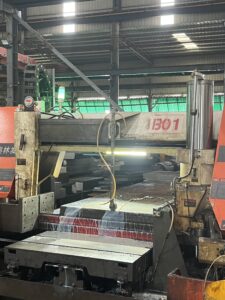
Contact Otai for D2 / 1.2379 Tool Steel
Looking for D2 tool steel in round bars, flat bars, or plates?
Contact Dongguan Otai Metal Material Co., Ltd. for material availability, technical specifications, and quotations.
Email: rika@otaisteel.com
WhatsApp: +86 136 4282 5398
We welcome inquiries from steel stockists, tool manufacturers, machining companies, and industrial distributors worldwide.