Choosing the wrong mold steel for large plastic molds can lead to serious production problems, increased costs, and shortened mold life. Many mold manufacturers initially choose lower-cost materials like 1.2311 or 1.2312, only to face unexpected issues later.
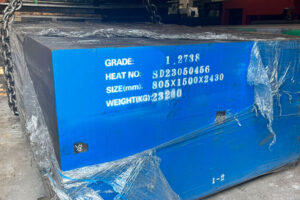
That’s why 1.2738 mold steel is widely recommended for large mold applications — especially when toughness, uniform hardness, and stability are critical.
Let’s look at the most common problems when NOT using 1.2738 for large molds.
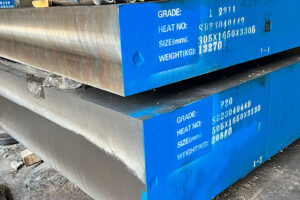
1. Uneven Hardness in Large Mold Blocks
One of the biggest issues with large molds is hardness inconsistency.
When using steels without Nickel alloying (like 1.2311 or 1.2312), hardness often drops significantly from the surface to the core.
What Happens?
- Surface hardness is acceptable
- Core hardness becomes softer
- Mold wear increases
- Mold life becomes shorter
Why 1.2738 Solves This
1.2738 mold steel contains Nickel, which improves hardness uniformity, even in large thickness molds.
2. Cracking Risk During Machining
Large molds require heavy machining, and this introduces internal stress.
Without sufficient toughness, mold steel may develop:
- Micro cracks
- Stress cracks
- Edge cracks
These cracks may not appear immediately, but show up during production.
Why This Happens
Steels without Nickel typically have lower toughness, especially in large sizes.
Why 1.2738 Is Better
1.2738 mold steel offers higher toughness, reducing cracking risks during machining.
3. Poor Polishing Performance
Large molds often require:
- High-gloss surfaces
- Optical finish
- Mirror polishing
But some steels perform poorly in polishing.
Problems You May Face
- Orange peel surface
- Uneven polishing
- Surface defects
- Time-consuming finishing
Why 1.2738 Works Better
1.2738 steel has cleaner microstructure, making it ideal for:
- Mirror polishing
- High surface finish
- Optical plastic products
4. Shorter Mold Life
Using lower-quality mold steel often leads to:
- Faster wear
- Frequent repairs
- Downtime
- Higher production cost
Large molds are expensive. If mold steel fails early, replacement cost is very high.
Why 1.2738 Extends Mold Life
1.2738 mold steel provides:
- Better toughness
- Stable hardness
- Better wear resistance
This results in longer mold life.
5. Deformation During Machining
Large mold plates are prone to deformation during machining.
Without good internal structure:
- Plates bend
- Dimensions change
- Machining becomes difficult
Why This Happens
Lower-grade steels often have:
- Poor stress distribution
- Internal segregation
- Non-uniform structure
Why 1.2738 Reduces Deformation
1.2738 steel has better internal quality, reducing deformation risks.
6. Poor Performance in Large Thickness Molds
Large molds often require thickness over 400mm or even 800mm.
Some steels cannot maintain performance at this size.
Problems Include
- Soft core
- Weak strength
- Cracking risk
Why 1.2738 Is Ideal
1.2738 mold steel is designed for large sections, thanks to Nickel alloying.
7. Higher Maintenance Costs
Using lower-grade mold steel often means:
- Frequent polishing
- Repair welding
- Maintenance downtime
This increases production costs.
1.2738 Reduces Maintenance
Better toughness and uniform hardness reduce maintenance frequency.
8. Poor Surface Texture Results
For textured plastic molds, poor steel quality leads to:
- Uneven texture
- Surface defects
- Inconsistent product appearance
1.2738 Advantage
1.2738 mold steel provides excellent texture performance.
9. Risk of Mold Failure During Production
In large-scale production, mold failure can cause:
- Production delays
- Customer complaints
- Financial losses
Using 1.2738 mold steel reduces this risk significantly.
10. Long-Term Cost Becomes Higher
Some buyers choose cheaper steel to save money upfront.
However, the real cost includes:
- Maintenance
- Repair
- Downtime
- Mold replacement
In many cases, using cheaper steel costs more in the long run.
Comparison: Using 1.2738 vs Not Using 1.2738
| Factor | Using 1.2738 | Not Using 1.2738 |
|---|---|---|
| Toughness | High | Medium |
| Hardness Uniformity | Excellent | Poor in large size |
| Mold Life | Long | Shorter |
| Cracking Risk | Low | Higher |
| Maintenance | Low | High |
| Polishing | Excellent | Medium |
Need 1.2738 Mold Steel?
Contact us today:
📧 Email: rika@otaisteel.com
📱 WhatsApp: +8613642825398